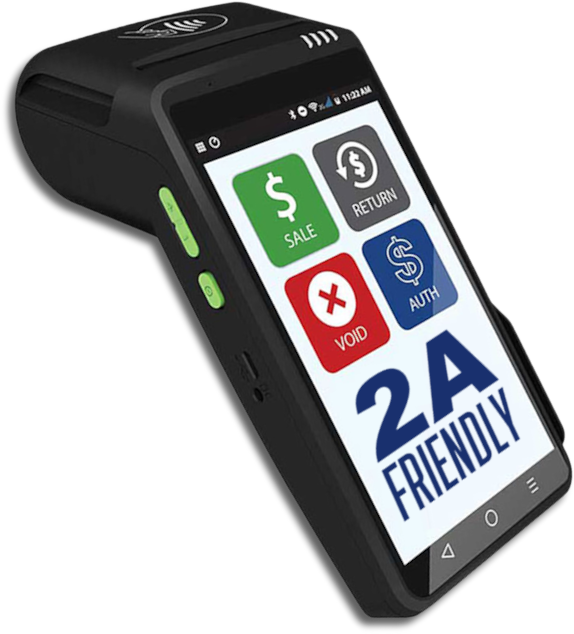

Credit Card Terminal

A credit card terminal is a type of a Point of sale (POS) terminal that can do transactions with a credit card. A couple of types of credit card terminals are available to merchants. Most have the same basic purpose mobile credit card terminal and functions. They allow a merchant to insert, swipe, or key in manually the required credit card information and transmit such data to the merchant service provider for authorization and then later on the transfer the fund to the merchant.

With a credit card terminal, a debit or credit card is all the customer needs to pay for goods or even withdraw cash at a merchant store. Electronic credit card terminal technology has become standard in supermarket and store checkout counters, but these machines are also widely used by banks and other organizations. In order to use a credit card terminal, a store may attach an existing cash register. However, mobile and wireless credit card terminal technology is also available.

Many people now routinely use credit cards to pay for all their transactions. However, there are certain laws and regulations which might limit their use. In certain countries or regions, for instance, banks charge customers for every debit or credit card transaction. In other cases, transactions fees are applied to merchants every time the credit card terminal is used.

Nearly all stores accept credit cards and to boost your business, you should too. A credit card virtual terminal is great for many businesses and for a multitude of reasons. When a phone line is not available or is unreliable, a virtual terminal credit card processing system is the ideal alternative choice. These machines use the internet to process credit cards and payments using your desktop, laptop, and even tablet if you’re on the go.


Get a Free Quote For


Credit Card Processing:

Credit Card Machine | Machines For Credit Card Processing


A credit card machine is a type of machine that can do credit card transactions. A couple of types of credit card machines are available to merchants. Most have the same basic purpose and functions. They allow a merchant to insert, swipe, or key in manually the required credit card information and transmit such data to the merchant service provider for authorization and then later on the transfer the fund to the merchant.

Most new models not only process credit and debit cards but can also handle gift cards, checks and so on. The majority of card machines transmit data over a standard telephone line or an Internet connection (either wired or wireless). Some also have the ability to cache transactional data and transmit the data to the gateway processor when a connection becomes available; immediate authorization is not available at the time the card was processed which can subsequently result in failed payments. Remote wireless machines can transmit card data using either cellular or satellite networks.

credit card machines

Retail Merchants have largely moved to using credit card machines to directly capture swiped card information instead of manually entering in card details. This provides an efficiency benefit of decreased transaction processing times. Previously, merchants could obtain lower processing costs by processing chip cards instead of magstripe cards.
Key functionality of a card machine

Modern card machines have multiple features. Depending on the needs of the merchant and the type of transactions processed by the card issuing bank, key operations and functions include:

Acceptance of credit, charge, and debit cards (both domestic and foreign, however foreign cards might have higher processing costs)
Key Entry (for Customer Not Present mail and telephone order)
Tips / Gratuities
Refunds and Adjustments
Settlement (including Automatic)
Pre-Authorisation
Remote Initialisation and Software update
POS Integration
Multi-merchant Capabilities
Pen or PIN authorization by the customer
Surcharge Function
Secure Password Operation

Manufacturers

Ingenico
VeriFone
Hypercom
Vivotech

credit card machine

What Happens At the Point of Sale

When a merchant swipes a credit card or debit card through a credit card machine at the stores the information from the magnetic stripe on the back of the card to be read. The machine will transmit the credit card data (Name, address, account number etc.) to the bank that issued the card in order to verify that the account exists. If there is enough credit or cash in the account to cover the sales transaction, the issuing bank generates an authorization code, and then places a hold on the cardholder’s account for the amount of the sale.

merchant-account-service


Get a Free Quote For


Credit Card Processing:


Hypercom T4205 Credit Card Terminal


Why settle for a dial terminal that limits your business? The Hypercom T4205 is everything your business needs, and nothing it doesn’t. The Hypercom T4205 is built on the extremely successful T4200 platform, you are assured a terminal that will offer your business ease of use, simple integration and trouble-free years of credit card processing.

The Hypercom T4205 credit card terminal combines simple workhouse features with racehorse pace utilizing its modem dial out. It supports value added applications such as check conversion with guarantee or our gift/loyalty card program. The thermal printer handles customizable text and graphics at 18 lines per second, the industry leading rate!

Witness the Hypercom T4205 in action and you’ll wonder what you’ve been waiting for!

Features:
• Dial capability for fast transaction flow
• Intel XScale 32-bit processor – Quickest Transactions
• Rapid Configuration – Minimum keystroke setup
• Security standard – Fast, secure PIN entry
• Multi Merchant Capable – Up to 20 accounts
• Supports value added applications, Check Conversion, Gift Cards, PayPass

Perfect for:
Salons
General Retail
Kiosks
Carry Out, Gas stations
Discount Outlets
Department Stores
Restaurants and Coffee Shops
Grocery stores
Day Care
Cinemas and Theaters
Hotel/Motel/Lodging
Boutiques
Building Materials
Auto Repair
Medical Office or Clinic
Government Office
Any business who need the capability of accepting cards!


Internet Commerce Merchants

We are a world leading consultant group for hard to acquire and low risk merchants. We specialize in hard to acquire accounts, or merchants looking for a service above the normal offerings from traditional merchant accounts.

Retail Merchants

From the basic Hypercom T7 terminal, to fast IP enabled terminals, to USB based computer card readers (with QuickBooks compatibility), and wireless terminals, we can provide the correct equipment for your swiped transactions.

Mobile Merchants

We can support a wide range of mobile devices, from the iPhone to the iPad, to BlackBerry’s and Android’s. Please speak with an account manager for details on the best solution for your business.

merchant-account-service


Get a Quick Quote:

VeriFone Taking Aim At Square

When Square Inc. launched its mobile card reader in 2009, VeriFone Systems Inc. was on its heels with PayWare Mobile. Now the terminal maker’s ready to roll out another rival to Square with a product it calls Sail.

Whereas VeriFone designed PayWare Mobile for use off the shelf, it designed Sail for small businesses with technical savvy. It plans to offer Sail with open-source software that developers can adapt to work with merchants’ inventory software.

Merchants also may use Sail as is, just like VeriFone’s earlier product. Square similarly designed its product for merchant use right out of the box.

Developers will be able to register with San Jose, Calif.-based VeriFone to receive programming interface tools. By the end of the year, Sail will work with several different advertising platforms and smartphone apps.

“Square did a great job in showing everyone there is a micromerchant market,” says Greg Cohen, senior vice president and general manager with the SMB Commerce group at VeriFone. “But Square only works with Square [software]; … ours is open to develop other applications on top of it, or inside our application.”

Other payment companies, such PayPal and the major card brands, offer developers toolkits to better integrate their payment products.

VeriFone is “playing catch-up baseball in a market that is now crowded by Square, PayPal” and others, says Brian Riley, a senior research director in the bank cards practice at CEB TowerGroup. “It’s a play that they have to make, and they are definitely making it late in the game.”

Since Square’s launch, VeriFone has criticized the rival product. Its most blatant broadside was a website it made dedicated to the idea that Square’s reader could be adapted to work as a skimming device. Square endured the attack and reportedly has worked to improve its device’s security.

Sail is the first product to come out of VeriFone’s roughly five-month-old SMB Commerce group. Cohen joined VeriFone about six weeks ago.

VeriFone has a better shot at success with Sail than with PayWare Mobile, says Rick Oglesby, a senior analyst at Aite Group.

“Their previous strategy was to work with traditional merchant acquirers who weren’t focused at targeting micromerchants, so there was a bit of a mismatch between the product and the channel,” he says. “This is a step forward because they are now matching their products and their channels.”

Hypercom L5300 Credit Card Terminal

Large color screen allows for both sgnature capture and in-line advertising campaigns

Hypercom L5300 Payment TerminalHypercom’s L5300 payment terminal features a 400 MHz, 32-bit processor for fast transactions, and supports streaming or pre-loaded video clips. With its large capacity memory of 128MB standard (256MB optional) and a MicroSD memory expansion slot, the L5300 securely accepts value-added applications to meet your needs now and in the future.


The L5300 has an 18-bit (256K) color, full VGA (640 x 480 resolution), large LCD display, integrated capacitive glass touch screen, audio and video capabilities, and electronic signature capture. This allows the L5300 to easily support interactive marketing programs and in-line advertising campaigns. All of this packaged in a small footprint and light-weight design.


The L5300 includes an integrated keypad with a non-removable rubberized privacy shield. Raised characters on keys were designed to address the needs of the visually impaired. An audio jack also allows for audible prompting using head phones to help meet Section 508 requirements.


Hypercom’s commitment to security does not stop with the meeting of payment security compliance requirements. The L5300 comes standard with an encrypting magnetic stripe reader (MSR), ensuring the card data is automatically encrypted as cards are swiped, thus protecting sensitive card information during the transaction process. Each device has a full X509 public key infrastructure, allowing retailers to protect their applications from hacking and preventing all malware attacks.


Approvals

  • PCI PTS 2.xx

  • PCI PA-DSS

  • X509 Standard Public Key Infrastructure

  • EMV Level II

  • Interac

  • PCI PIN Security Guidelines 2.0, Normative Annex A approved (Remote Key Injection Capability)

  • RoHS compliant

Security Features

  • Application Signing

  • Download System Signing

  • POS System Signing

  • Public Key Signing

  • End-to-End Transaction Security

  • Remote Key Injection

Credit Card Processing

Accepting credit and debit card payments is essential for businesses in today’s environment. Whether you are just opening your business or an established operation, accepting card payments allows you to give customers the choice and convenience of paying with their preference of cards or other forms of electronic payment.
By accepting electronic payments at your business, customers are not limited to a single form of payment and can use their credit or debit card to purchase, more items than just what can be purchased with the cash in their wallets. Accepting electronic payments also streamlines the check out process and reduces the time a customer stands in line.


merchant-account-service

Get a Quick Quote:

Check Reader – Check Imagers

Featured Check Readers and Imagers


  • MagTek MICRImage Readersprovide digital check imaging with a small footprint.  MICRImage is essential for Check 21 Plus and eGold programs. There are two different models of MagTek MICRImage readers:
    • MagTek MICRImage with Modem – Features reliable modem technology with easy configuration and dependable image transmission.  Certified with the following terminals:
      • VeriFone Vx 510/ 570 and Omni 3730 / 3740 / 3750
      • Hypercom T4100 / T4205/ T4210 / T4220
      • Nurit 2085 / 8320 / 8400
    • MagTek MICRImage with Ethernet has broadband internet connectivity and captures the check details and images accurately to process transactions in a few seconds.  This check reader is certified with the following terminal:
      • VeriFone Vx 570


  • MagTek Mini-MICR Reader:A resourceful and reliable solution for practically any point-of-sale terminal on the market today. They are compatible with nearly every terminal and can be easily configured with a configuration check. The configuration check differs from one terminal type to the next.  Certified with following terminals:
    • Hypercom T7 series
    • VeriFone Vx and Omni series
    • Nurit 2085/ 8320 / 8400


  • RDM ec6004i/ec6014f Imagers provide digital check imaging with a unique footprint.  The RDM is a plug and play check imager that does not require configuration checks. RDM scanners capture the MICR information as well as the check image. The MICR information is transmitted through the card terminal’s modem to a check authorization service that enables the electronic conversion of checks with the EC6000i series of imagers.  The RDM Imager must be connected to a phone line (independent of the line used by the point-of-sale terminal) s that the images can be uploaded to the archive.  This imager is certified with following terminals:
    • Hypercom T7 series, T41xx and T42xx series
    • VeriFone Vx and Omni series
    • Nurit 2085/ 8320 / 8400

Featured Card Reader

MagTek mini card readers provide a low cost solution for swiped card transactions using your PC solution.  Powered through the keyboard port, a dual color LED light indicates accuracy in performance.  Multiple port options are available: USB, Wedge, RS-323, and TTL.


MICR Check Readers

Debit Card Pin Pads

There are several debit card pin pads on the market. Pin pads include products from VeriFone, Hypercom and Nurit. If there isn’t a debit card pin pad on this list there’s a good chance we can get it for you.


With the Nurit 202 PIN Pad you can accept debit card transactions. The Nurit 202 PIN Pad is secure and easy to use, and will give you more satisfied customers.

The Nurit 202 PIN Pad gives you the power to provide protected debit/credit nurit 202transactions for your customers. Lipman’s new Nurit 202 PIN pad has an easy to use hand-held design, keypad, and simple one-to-two line instructional prompts. The unit also supports the Derived Unique Key Per Transaction (DUKPT) to enhance security and management.

For security purposes, all pin-pads need to be encrypted by your merchant account provider. We will handle this service, free of charge, for all of our merchants. If you are currently using another processor, you will need to contact them once you receive the product. You can call us at 800-757-5453 and we can look up your pin pad serial number to verify it meets all the current security standards.


The Hypercom P1300 PIN pad is an affordable alternative that allows you to start accepting debit cards. Get the Hypercom P1300 PINpad with a Low Price Guarantee. The Hypercom® P1300 PCI-approved PIN entry device is designed to meet the  Hypercom P1300 PIN padPCI-PED security standards for PIN entry, providing merchants with low-cost migration to newly imposed security guidelines. The Hypercom P1300 is compatible with all Hypercom product families and features flexible communications options for rapid integration with electronic cash register (ECR) systems.For security purposes, all pin-pads need to be encrypted by your merchant account provider. Merchant Warehouse will handle this service, free of charge, for all of our merchants. If you are currently using another processor, you will need to contact them once you receive the product. 


Accept debit cards securely with the 252 PIN Pad. Practical design and sophisticated security features make the Nurit 252 PIN Pad a safe choice for your business.

The Nurit 252 PIN Pad gives you the power to provide protected debit/credit Nurit 252 PIN Padtransactions for your customers. The Nurit 252 PIN pad has an easy to use hand-held design, keypad, and simple one-to-two line instructional prompts. The unit also supports the Derived Unique Key Per Transaction (DUKPT) to enhance security and management.

For security purposes, all pin-pads need to be encrypted by your merchant account provider. Merchant Warehouse will handle this service, free of charge, for all of our merchants. If you are currently using another processor, you will need to contact them once you receive the product.


Let your customers pay with their debit cards with the VeriFone PIN Pad 1000. With great value and convenient solutions, the VeriFone PINPad 1000 is a safe pick.

The VeriFone PIN Pad 1000 is the answer for all of your PIN-based transaction needs. verifone 1000The 8-character display allows your customers to enter their PINs carefully and confirm the purchase total. Your customers will appreciate the convenience of using their debit or ATM cards.

For security purposes, all pin-pads need to be encrypted by your merchant account provider. Merchant Warehouse will handle this service, free of charge, for all of our merchants. If you are currently using another processor, you will need to contact them once you receive the product.


BankPoint II is the smart way to add PIN entry to merchants’ transaction processing portfolios. A secure, easy-to-use and VISA® PED certified PIN pad, BankPoint II fulfills the business needs of both merchants and cardholders.

The device fits comfortably in the palm of the hand for confidential data entry, and its linkpoint bankpoint pin padwidely spaced keys reduce errors. With an easy-to-read, two-line display, BankPoint II shows transaction data at a glance.

For security purposes, all pin-pads need to be encrypted by your merchant account provider. We will handle this service, free of charge, for all of our merchants. If you are currently using another processor, you will need to contact them once you receive the product.


Credit Card Terminal with Build In Pin Pad

Why settle for a dial terminal that limits your business? The T4205 is everything a merchant needs, nothing they don’t. Since the T4205 is built on the extremely successful T4200 platform, your existing certified business applications for T4200 family terminals will run on the T4205 without any modifications. That’s right! No re-certification is needed to take immediate advantage of the economically priced and full featured T4205.

T4205 comes standard with 24MB of total memory, an ARM9 processor for fast transactions and multi-application support. The T4205 is also PCI PED approved so T 4205that you can support debit with or without an external PIN pad. No better value exists for sensibly upgrading your install base to PCI PED compliance. You can also accept chip card transactions with the optional EMV-approved reader.

Features of Countertop /Optimum T4205

  • Powerful — 32-bit ARM9 processor
  • Fast — V.34 modem standard
  • Functional — Full multi-application
  • Easy-to-use — ADA-style key layout and integrated PCI PED approved PIN pad
  • Adaptable — Optional EMV chip card reader
  • Economical — Perfect compliment to the T4200 product range
  • Modern — High-end features and value
  • Secure — Designed for the most stringent security regulations

Extended Features of Countertop /Optimum T4205

Simple, Easy-To-Use Features

  • Run your T4200 family applications on the T4205 without the time and expense of re-certification or re-training your helpdesk. If you already support a T4200 product, the T4205 makes perfect sense!
  • Large, ADA-style, 19-key layout allows for easy key recognition. The Clear, Enter, Cancel and “5” keys provide tactile feedback for visually-impaired customers
  • Slim form factor makes it perfect for handover installations
  • Industry-leading software includes the functionality necessary to introduce value-added opportunities to merchants.

Fast, Time-Saving Performance

  • V.34 modem provides superior performance for faster downloads and faster data transfers
  • The ARM9, 32-bit processor provides speed and functionality. It delivers four times the processing power and speed of an ARM7 processor used in competitive devices.

High Value

  • With more memory, 24MB standard, than competitive devices in its class, the Optimum T4205 easily handles software size increases due to regulatory apply merchant account servicerequirements as well as the addition of value-added applications
  • The T4205 is PCI PED approved for secure PIN transactions
  • Check imagers, PIN pads and contactless check readers can be connected using the peripheral port to provide more payment choices
  • Secure design meets the most stringent security regulations in the industry, including PCI PED
  • The HyperSafe®32 architecture provides the ultimate protection against any unauthorized loading of applications. With HyperSafe®32 enabled, you can ensure merchant retention opportunities.

Industries & Applications of Countertop /Optimum T4205

  • Retail and restaurant
  • Free terminal programs
  • Small merchants
  • Sunset programs
  • Check verification
  • Gift and loyalty
  • Retail with tip
  • Multi-Merchant
  • Multi-Application

Approvals for Countertop /Optimum T4205

  • PCI PED Approved
  • EMV Level 1 and 2
  • RoHS Compliant

Credit Card Terminal + Built-in Printer & Pin Pad

Our Credit Card Terminal + Built-in Printer is Easy to use. It offers Ease, Speed, and Security on all your Credit Card Transactions.  Your Credit Card Terminal will Print “you” and your “Customer” a copy of the transaction with its high speed thermal printer in seconds. It even prints a detail report at the end of the day. Detail & Batch Total.

Nurit 8020 Wireless Terminal

Nurit 8020 Wireless Terminal

The NURIT 8020 is the most powerful all-in-one handheld wireless payment terminal available today. It is the ideal solution for businesses seeking the most effective way to Nurit 8020 Wireless Terminalcomplete credit card transactions off-site and boasts a wide range of payment services. The NURIT 8020 supports credit and debit transactions and is also equipped with an internal pinpad, smart card reader and an easy-to-load high-speed thermal printer.

PERFECT SOLUTION FOR MERCHANTS ON THE GO

The NURIT 8020 is the perfect payment terminal for all of your mobile transaction needs. The 8020 is a lightweight, handheld wireless device that works on the reliable Cingular GPRS network, allowing you to bring your products and services directly to your customers no matter where they are. The 8020 can also be combined with a headset in order to double as a cell phone, offering both voice and data transfer in real time.

IMPRESSIVE CAPABILITIES

The NURIT 8020 features multi-application support, a large, back-lit graphical LCD display and an 18 button ergonomically designed back-lit keypad with programmable quick keys. The 8020 can also be enhanced with many additional features, including a touch screen for electronic signature capture, a docking station for a battery recharge and up to 6 MB of additional memory.

ADD THIS ADVANCED WIRELESS PAYMENT TECHNOLOGY TO YOUR BUSINESS TODAY

The NURIT 8020′s wireless functionality and dependability cannot be matched by any other wireless terminal. The 8020 is one of the most flexible terminals on the market today and its diverse features, simple to use graphical interface and compact size make it an ideal all-in-one terminal for any business. Contact us today and add the power of wireless credit card processing to your location today!

Accept credit cards today


POS System – Point of Sale Systems

Select a Point of Sale (POS) System to Fit Your Business

The POS system market has two primary types of customers: retail operations and hospitality businesses such as restaurants, bars, and hotels.

  • Retail POS system customers: Retailers have simpler POS system needs than hospitality businesses because they complete transactions at once and often have   little product variation. Some POS system features retailers may want include the  POS System - POS Systems - Point of Sale (POS) Systemsability to support kits (for example, three for $2 deals), returns and exchanges, and support for digital scales. Your retail POS system will need to support matrixes if you sell items that come in a variety of styles, such as clothing or shoes. Matrixes let you create one inventory and price entry for a particular item, such as a sweater, but still track sales according to size and color.

  • Restaurant POS system customers: Restaurants and other hospitality businesses have different POS system requirements. Casual restaurants focus on efficiency. Retail-style restaurants such as sub shops use restaurant POS systems to relay orders, cutting down on time-per-transaction and reducing errors that can occur when passing hastily-scrawled orders back to the kitchen. In quick-service restaurants, employees take orders on terminals in the front, which automatically display on monitors in the food preparation area so that food can be quickly assembled and delivered to the customer. For table-service restaurants and fine dining, POS systems need to create and store open checks, as parties order more over time, as well as track which server is responsible for which table.

  • Hotel POS system customers: Well-integrated hotel POS systems allow you to transfer meal charges from the dining room to guests’ rooms with just a button or two. Hotel managers need to be aware that not all POS systems integrate with all property management software.


Retail POS System

Retail Point-of-Sale Systems


Leading retail point of sale software. Cash Register Express® can handle all your retail point-of-sale payment processing as well as barcode scanning and inventory management. Along side these typical retail POS software needs, Cash Register Express® also includes extra benefits and features that many other POS systems don’t.

Retail POS System Key Features:

  • In-depth reporting
  • Faster transaction times
  • Faster employee training
  • Track customer history
  • Automate purchase orders

Computerized POS System 

A computerized POS system can provide significant returns if your retail or hospitality business has annual revenues of around $700,000 to $900,000. For example, if a restaurant with 20 tables and an average check of $45 can increase turnover by one party per table, it’ll make an extra $900 on a busy night. Below this level, an electronic cash register can probably meet your needs, unless you want the reporting features of a POS system or see it as an investment that can boost efficiency starting on opening day.

  • Save money with a POS system: A computerized point of sale system can cut down on shrinkage (the inventory that disappears from your store or restaurant) due to theft, waste, and misuse. It can also ensure that every item in your store or on your menu sells for the correct price and generate detailed sales reports that can help you focus on higher-margin items.

  • Get more information with a POS system: Know where you stand at any point of the day. A POS system can instantly tell you how many of a particular product have sold today (or last week, or last month), how much money you have in your cash drawer, and how much of that money is profit. Detailed sales reports make it much easier for you to keep the right stock on hand. Track inventory, spot sales trends, and use historical data to better forecast your needs. Often, POS software can alert you to reorder when stock runs low. Plus, it allows you to collect the names and addresses of your best customers as part of standard transactions, which you can then use for targeted advertising and incentive programs.

  • Increase productivity with a POS system: POS systems can dramatically reduce the time you have to spend doing inventory, sales figures, and other repetitive but important paperwork. The savings here: time and peace of mind. In retail settings, barcode scanners and other POS features make checkout faster. Restaurants will find their order process greatly streamlined as orders are relayed automatically to the kitchen from the dining room. In both cases, your customers get faster, more accurate service.

Keep in mind that realizing these benefits requires a commitment to utilizing the POS system capabilities to their fullest. Without appropriate training and ongoing analysis, even the most sophisticated POS system will be no more useful than a basic cash register.

Also make sure your business has “clean” electrical power. Fluctuations in the electrical supply from using blenders, slicers, microwaves, and other mechanical devices plugged into the same electrical circuit can easily cause enough noise in the power supply to wreak havoc with POS computer systems. You may need to filter power to eliminate troublesome spikes and noise before they get to your POS terminals or install a dedicated circuit with an isolated ground.

Choose Point of Sale (POS) System Computers & Software

A computer acts as the central component of a POS terminal, running the application. You can find complete PC-based POS systems or buy computers separately. When you buy all your hardware from one source, the reseller can take responsibility for the entire system, which can make setup and ongoing support easier. Some sellers even charge an extra fee if you supply your own computer.

If you buy computers separate from your POS system, coordinate the purchase with your POS system seller. Get exact specifications and follow them closely to avoid most compatibility problems. POS applications are not that demanding on the computer, so an average to low-end computer will usually get the job done. The computer does need to be upgradeable; some POS software requires newer operating systems.

Do not use your POS computers for anything other than POS. Especially resist the temptation to connect them to the Internet and use them for Web browsing or email. As with any computer systems, backups are important. When you have your POS system set up, create automated backup schedules.

Select POS system software

Most POS software packages offer similar functionality and you can safely assume that all major POS software handles standard customer transactions. POS software typically displays items and prices in a sale, handles taxes, returns, voids, payments (including credit card processing), layaways, and discounts, generates accounting reports, and tracks inventory. Restaurant POS software allows you to create checks by diner or table, place special orders, track orders per server, move diners from the bar to a table, generate waiting lists, and more. You may want to consider additional features depending on your business.

  • Internet data boards: Some POS software packages offer an “Internet data board.” Internet data boards provides a snapshot of the day’s business that you can access from anywhere with a Web connection. For franchises or other businesses with multiple locations, this can provide significant peace of mind. Other systems can be set to download daily totals to a central server.

  • Multimanagement: Businesses with branches in different regions may also find “multimanagement” useful. Multimanagement allows you to share some settings but vary others between sites. For example, you can offer the same menu with different prices in different locations.

  • Frequent diner program support: Certain restaurant POS software packages support frequent diner programs. Frequent diner programs reward visitors with incentives or discounts. For example, you could use a point system that works like frequent flyer miles. Associate each menu item with a point value and allow diners to accumulate points that they can later exchange for a free dessert, half-price special, or meal discount. By assigning higher point values, you can give a boost to high-profit or low-performing items. You can also market to customers based on their typical purchase or time of visit.


As you add features, POS software becomes more complicated and costly. Most major POS software publishers provide a software demo on their websites. Many even provide a full working version of the POS software either as a download or on CD. Using the software on your own can help you evaluate ease of use and judge stability. Know what you need POS software to do before comparing long lists of features. Draw up a list of factors that make your business unique. What unusual purchasing programs do you have? Do you offer incentives that require very detailed or specific tracking? Other questions to ask include:

  • Does the POS software interface with my accounting software? How extensive is that integration? Does it simply an export of journal entries for the day or is there a thorough integration of the two programs?

  • How easy is it to make changes to the POS software programming? You will need to be able to change prices, items, and employees regularly.

  • Does the POS software credit card processing feature work with my current merchant account?

  • What type of reports can the POS software produce? Every piece of software will give you basic reports. Ask for samples so you can compare.

  • Does the POS software support gift card transactions? How thoroughly? Can cardholders check their balances online?

  • Can you make changes to the POS software programming in advance? For example, can you create a Christmas menu sometime in October and set it to automatically take effect December 1?

  • Does the POS software interface with liquor control devices? (LCDs track each pour of a bottle.)

  • Can the POS software support my special discounts and promotions? Some POS software may not easily accommodate unusual programs.

Consider POS hardware & software compatibility

When choosing your POS system, you may want to look for a system with software that can run on any type of PC so you’re not tied down to a particular vendor or platform. Some manufacturers use proprietary hardware, which gives you less flexibility to purchase upgrades and additional equipment from other sources. The primary advantage of proprietary systems is that software is written specifically to work with one piece of hardware, ensuring seamless compatibility.

Upgrading your POS system as your business grows is not only easy — it’s almost expected. Regular software updates let you get access to the latest features. Upgrades may be included in your service contract, or may involve a small additional fee. Adding new hardware – entire new terminals, or new peripherals for existing terminals – is also generally easy, provided the hardware you add is compatible with your software. Buying “more of the same” is a good way to make sure everything connects smoothly.


Evaluate Point of Sale (POS) System Hardware

Most basic POS systems consists of a cash drawer, receipt printer, monitor, and an input device. Employees can use touch screens, programmable keyboards, scanners, or handheld terminals to enter data into a POS system.

  • POS system touch screens: Many users find touch screens more intuitive to use than keyboards and touch screens provide flexible user interfaces and programming. Most touch screens are sleek flat-panel LCDs, which cost slightly more than traditional CRT monitors, but last longer, use less electricity, and take up less space. With both CRT and LCD displays, avoid “overlay” touch screens added on to regular monitors. They can be prone to breakdowns.

  • POS system keyboards: Grocery stores often prefer programmable POS keyboards that allow you to program individual keys for specific item codes and prices. Some POS keyboard models are standard 101-key models that you find with any computer. Others are smaller, more POS-specific devices, such as the flat-panel membrane keyboards common in fast food outlets. Often, POS keyboards come with built-in magnetic stripe readers for processing credit cards.

  • POS system scanners: Scanners read a bar code and send the resulting numbers back to your POS system computer, improving speed and accuracy during checkout. They typically connect to the system through Y-connectors called wedges that make them function as an extension of the keyboard. Choose a scanner based on your average customer volume at checkout.

    • Several customers: If you do not usually have more than a customer or two in line, CCD scanners or entry-level laser scanners should meet your needs. Inexpensive scanners based on charged-couple device (CCD) technology have a short range, meaning that scanned items need to be 1 to 3 inches from the scanner. Laser scanners, which use a beam of light to read bar codes, offer better scanning ability with the ability to scan at longer distances.

    • Constant flow of customers: A fairly constant flow of customers might call for autosensing laser scanners. Autosensing laser scanners turn themselves on when an item is placed in front of them, scan the code, and then turn off again.

    • High-volume businesses: Very high volume businesses should investigate omnidirectional scanners and embedded scanners. Omnidirectional scanners send out 15 or 20 lasers simultaneously, letting you scan a bar code from any angle. Top-of-the-line embedded scanners, popular in supermarkets, are omnidirectional scanners installed below a counter.

  • POS system handheld devices: Handheld terminals (essentially PDAs) wirelessly transmit orders back to a base station. Newer write-on handhelds are also available that use handwriting recognition software to parse orders and send them to the kitchen and bar as needed. Handheld terminals allow servers to spend more time on the floor taking orders, interacting with customers, and up-selling desserts and drinks — offsetting the cost difference between the handheld terminal and less expensive touch screens.

Select additional hardware to finish out your POS system.

  • POS printers: Every POS system needs a printer to create credit card slips and receipts for customers. Many restaurants also use POS printers to send orders to kitchen and bar staff. You’ll find dot matrix printers and thermal printers. Inexpensive dot matrix printers, also known as impact printers, use pins and an ink ribbon to print on regular paper. They are better suited for kitchens where ambient temperature can prevent thermal printers from working effectively. Thermal printers use heat and special heat-sensitive paper to generate receipts. They cost slightly more than dot matrix printers, but are faster, quieter, and generally more reliable because they have fewer moving parts. Over several years of use, the higher costs for thermal paper are just about balanced out by the need to buy both paper and ribbons for dot matrix printers.

  • Cash drawers: Cash drawers store cash, credit card slips, gift certificates, exchange receipts, and any other important paperwork. They frequently serve as a shelf for a display or other heavy pieces of equipment. Look for sturdy construction of at least 18-gauge steel that can stand up to constant opening and closing. Some cash drawers are more easily serviceable than others. Although the life expectancy of a cash drawer is measured in millions of cycles, make sure you can replace rollers, bearings, and other parts. In most cash drawers, the signal to open the drawer comes from the receipt printer — when buying components separately, look for compatible components.

  • Customer displays: Also known as pole displays, customer displays show item and price information to the customer and some support advertising. Compare size and display appearance and make sure your software is compatible with the display’s emulation.

  • Magnetic stripe readers: POS software processes credit cards, but you’ll still need a magnetic stripe reader to read the credit cards. Keyboards and touch screens often have built-in readers. If your input device does not, you’ll need to purchase a standalone magnetic stripe reader.

  • Check readers: Using magnetic ink character recognition (MICR), automatic check readers can quickly help you prevent fraud by verifying essential account information. If you see a significant volume of checks in your business, make sure your POS software supports check verification before purchasing a check reader.

  • Fingerprint ID readers: For added security, you may also want to add a fingerprint ID reader to your POS system that limits which employees can access the POS terminal. Unlike PIN codes that can be read over someone’s shoulder or magnetic swipe cards that can be forgotten by employees, stolen, or lost, fingerprint ID boxes read thumbprints and ensure the right employees can log on.

No matter which POS system hardware you choose, consider the environment where your employees will use it. Both keyboards and touch screens are available with varying levels of spill- and dust-proofing. When looking into handheld devices, ask about the “drop test.” Units are rated for toughness according to how much of a fall they can survive. Preventative maintenance can be important. Simply vacuuming out the cases and lubing and cleaning printers can extend their lives considerably.

Remember you will need a merchant account and credit card processing set up with retail swipe rates for the POS System to actually work !